
What boxing betting in New Zealand really costs in 2026
 Available in US
A New Zealand reader looking to put money on a boxing bout in 2026 runs into a smaller market than most countries allow. TAB NZ and its online sister brand Betcha are the only operators allowed to take online sports and racing bets in New Zealand, since an amendment to the Racing Industry Act 2020 took effect on 28 June 2025. Everything else — the European and Curaçao brands a Google search turns up — is outside that monopoly, with all the consequences that carries for complaints, payouts and the price you’ll be quoted. Reading this page carefully matters more than usual: the offer on the screen is one thing, the cost of betting through it is another, and on boxing specifically the gap between the two has been getting wider.
Current as of 30 October 2026 · verified against the Department of Internal Affairs’ guidance on the section 74AAA amendment and TAB NZ’s published app terms.
Table of Contents
- Where the cost really sits: how betting sites price a boxing bout
- Responsible gambling: what the lawful New Zealand operators actually do
- Bonuses and free bets: the part the page cannot promise and the part it must explain
- Predictions and strategy: what the public record actually offers
- Bet types and odds: how a boxing bet is built and what it pays
- Sports and tournaments: where boxing fits in the New Zealand market
- The top 10 operators a New Zealand reader actually meets
- Overview: what boxing betting looks like in New Zealand today
- Legality: the statute, the regulator, the loophole
- Boxing betting through TAB NZ and Betcha, in practice
- The eight offshore brands, evaluated against the same yardstick
- Operator verdicts: where each card lands
- Worked example: the margin at 1.90 / 1.90
- A cost-first reading of the boxing card
- The punchline
- Frequently asked questions
Where the cost really sits: how betting sites price a boxing bout
A boxing bout at a serious level runs 10 to 12 rounds, with newer fighters often booked into four-rounders; each round lasts three minutes with a one-minute rest between. That rhythm — long contests, short recovery — is the reason a boxing market has more than two outcomes in practice and only two prices on the slip in the simplest form. The market has to cover win-by-method, draw, and a stoppage at almost any round, and the bookmaker’s price embeds the cost of hedging those possibilities. The headline odds are honest about who is favoured, but the margin inside those odds is what a bettor pays whether they win or lose.
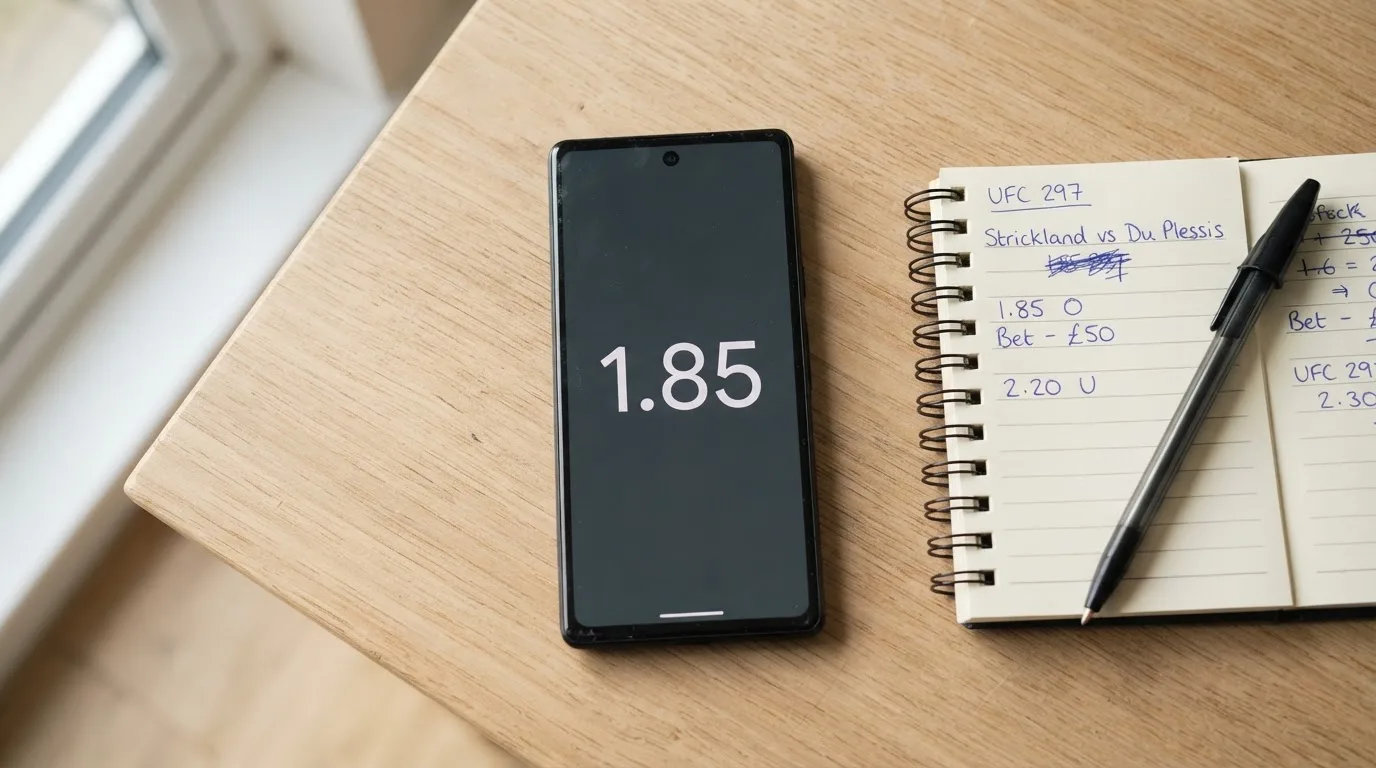
For a hypothetical even fight priced at 1.90 on each fighter, the math is straightforward and unforgiving. Adding the implied probabilities gives 1 ÷ 1.90 + 1 ÷ 1.90 = 1.0526, which means the bookmaker is paying out as if 105.26% of the pool had been staked — the extra 5.26% comes out of every unit bet on this market. On a $100 stake split evenly across both fighters, the player recovers only about $95 no matter who wins, with the rest kept by the operator. That 5% range (it is somewhere between roughly 3% on the deepest heavyweight title fights and closer to 8% on obscure undercard bouts) is the fixed cost you pay before you start. The remaining 95% is what fights back.
Two operational facts make the cost concrete. First, professional fights offer a third outcome the headline price can obscure — draw — and an “even” 1.90/1.90 line then stretches into a three-way market where the third column typically opens at around 12.0 to 16.0, dragging the total implied probability past 1.06. Second, the method-of-victory markets (KO/TKO, decision, draw) layer another margin on top: a single fight can carry six or more selections at sub-1.20 odds, and each one pays the same hidden tax by the same formula. Reading the margin on a boxing card involves reading several markets layered into the one event. Nothing on the slip tells the bettor the cost; only the implied-probability sum does.
How margin scales across a card
A main event at 1.91/1.91 sits at the low end of the range (about 4.7%). An undercard bout between two journeymen, where the public knows less and the bookmaker hedges more conservatively, can run at 1.85/1.85 (about 8.1%). Moneyline three-way markets — where the draw is its own column — typically add 2 to 3 percentage points because another outcome has to be priced. Method-of-victory markets usually run between 6% and 10% depending on the round groupings, and they shrink only when the round range tightens, which is also when they pay the least because each leg has absorbed more of the operator’s hedging. A bettor who wants to keep the cost below 5% picks from the deepest markets on the biggest fights; a bettor who picks freely across a card is paying closer to 8%.
The same rule generalises: the more outcomes the bookmaker has to price and the less public information it has to price them against, the wider the margin becomes. Boxing ticks both boxes on most nights. The cost is not a number on the page — it is what the page does not say.
Responsible gambling: what the lawful New Zealand operators actually do
TAB NZ runs deposit limits, time-outs and self-exclusion inside its app, and lists the free Gambling Helpline 0800 654 655 (text 8006) as a standing resource. A self-exclusion spans both TAB NZ brands — TAB and Betcha — so a problem gambler cannot bounce between the two to get around a ban. TAB NZ also pays a Problem Gambling Levy of 0.74% of its gross profits, the rate in force from 1 July 2025 to 30 June 2028, which funds treatment and prevention work through the Ministry of Health. For a bettor trying to keep a stake size down on a Saturday night card, the deposit cap and the time-out are the practical tools; the levy is the line item that explains why a small slice of every dollar staked through TAB NZ funds harm-minimisation work.
The published app carries a 17+ age rating on the New Zealand App Store while stating that customers must be 18 or over to bet — the rating reflects the broader category rather than the legal floor, which is 18 (betting under 18 is an offence under section 89 of the Racing Industry Act 2020). Land-based casino gaming carries a different age of 20 and must not be merged with the betting age. Account opening at TAB NZ requires a verified New Zealand address and ID; offshore operators do not require that, which is why they are attractive to problem gamblers — and why the framework around them is weaker.
There is no single national online-betting exclusion register in New Zealand. The register the 2026 online casino law will require is for online casinos only and does not cover sports or racing bets. Self-exclusion through TAB NZ is an operator-level tool, not a cross-industry block. It works for the brand it is taken out on, and the offshore brands a New Zealand resident can reach have no obligation to honour it.
Support services: the Gambling Helpline on 0800 654 655 is free, anonymous, and staffed around the clock. Safer Gambling Aotearoa runs education and training work. None of these are part of any bookmaker’s product; they sit beside it, and a reader who feels their betting drifting can contact one of them before they make another deposit.
Bonuses and free bets: the part the page cannot promise and the part it must explain
A “free bet” is the most common term a New Zealand bettor sees advertised on a boxing card, and it carries a built-in cost most bettors do not read. The stake of a free bet is usually not paid back when the bet wins — only the profit lands in the account — so a $10 free bet at 4.0 returns $30 in profit, not $40, and the headline price is $10 worse than it looks. The market margin then takes its own cut of that $30. Boosted odds work the same way at a smaller scale: a price moved from 3.0 to 3.5 sounds like a 17% lift, but the gap between the boosted price and the true odds is the operator’s cost of acquiring the customer, and the market underneath still carries its margin. A “risk-free” bet refunded as a free bet is not a refund in money, and the word “refund” reads generously until the small print does not.
Wagering requirements represent where the arithmetic becomes harsh. A bonus that lands as a cash credit usually plays through with a turnover multiple — the deposit-and-bonus total requires betting a set number of times at a minimum price before any of it withdraws. A 5x turnover on a $100 deposit plus $100 bonus necessitates $1,000 in qualifying bets at, say, 1.50 or higher before the wallet unlocks. The expected cost of those $1,000 of bets equates to the market margin times the turnover, and on a boxing card running 7% margins, that is $70 of value absorbed into the price the bettor witnessed on the screen. A bonus marketed as $100 in real money equates to closer to $30 once the qualifying bets and the margin are accounted for; a free-bet-stake-not-returned bonus equates to closer to the headline value divided by the average odds. The trade rarely proves worth making without reading every line on the promotion page.
TAB NZ’s “bonus bets” promotions are governed by its own terms and sit alongside the deposit-limit and self-exclusion tools. New Zealand does not have a published rule capping bonus size or wagering, which means the only floor under a promotion is the operator’s own terms page. Check that page before claiming. The market a New Zealand bettor is comparing against here is small — two brands under one operator group — so a promotion that looks generous is competing against a thin baseline, and the small print usually brings the headline back to earth.
Predictions and strategy: what the public record actually offers
Boxing tips have a long history of being incorrectly confident. The top-end heavyweight fights produce more rounds and more stoppages than the market expects roughly once every three or four cards; middling undercards go the distance or end early with no pattern the public data can see in advance. A “system” that wins across a season almost never exists, and any tipster paid by subscription whose track record is verifiable against a settlement feed is worth listening to; any whose record lives only on a sales page is not. The arithmetic behind the price is the only edge a bettor has against the bookmaker: read the implied-probability sums across the card and back only the lines where the price is genuinely wider than the model suggests it is. There are usually very few of those on any given night.
Bankroll discipline beats any tip. A bettor staking 1 to 2% of the bankroll per selection survives losing runs that wipe out anyone staking 5% or more, and a flat-stake approach removes the temptation to chase with bigger bets after a loss. The same staking plan applied across a card rather than to a single fight diversifies the variance that a single stoppage in round three triggers. None of this acts as a prediction. It forms the scaffolding inside which a prediction either pays off or does not — and a scaffolding absent on the night the bet is placed.
On boxing specifically, the public record offers little the books do not already use. Records, age, recent opponents and the pace at which a fighter has been finishing fights are priced in to the cent. What the public record does not fully price is the conditioning shape of a fighter on the night — a camp cut short, a weight miss, a fighter coming off a long layoff — and these are the edges worth chasing. They are hard to verify without a documentary source on each camp, which most bettors do not have. Honest strategy is to admit this and stake accordingly.
The same honesty applies to combinations and accumulators. Each leg of a multi multiplies its own margin into a single price, so a four-leg multi where every leg carries a 6% margin is paid out as if it cost about 26.4% at the equivalent single-bet odds — the headline lift over the singles prices is illusory. Boxing cards are built for these markets because public favourites often win and short-priced favourites compound attractively, but the operator has already collected the cost before the first bell. Mulis look generous; they pay less than the singletons they replace.
Bet types and odds: how a boxing bet is built and what it pays
A boxing bet works by staking a sum against a price and settling on one of the outcomes priced. Decimal odds say, for every $1 staked, this is how much returns on a winner — including the stake. A $10 stake at 3.50 returns $35 total, of which $25 is profit. Fractional odds are not the New Zealand convention; the betting app shows decimal prices in $ form ($2.10, $4.50), and the slip carries both stake and return pre-confirmation.
For a combination bet, prices multiply. Two legs at 2.10 and 1.80 give a combined price of 2.10 × 1.80 = 3.78; the same two outcomes settled separately each return their own amount, but combined the bookmaker’s margin compounds. Profit on a $10 winning multi at 3.78 equals $27.80; total return equals $37.80. None of this alters the cost; it merely shifts where the cost sits across the legs.
The boxing-specific bets a TAB NZ slip carries include:
- Win: pick the outright winner (a draw refunds most Win bets; check the market rules).
- Method of victory: pick KO, TKO, decision or draw (price varies widely, usually with a wider margin than the main line).
- Round groupings: pick the round range a stoppage will land in (3-4, 5-6, and so on; longer fights see more range and wider prices).
- Total rounds over/under: pick whether the fight goes past a round threshold (over/under 8.5 rounds is common on a 12-rounder).
- Head-to-head: identical to Win in pricing, sometimes separate book
- Each-way (mainly racing, occasionally available on boxer specials).
A boxing draw is its own outcome priced on the same card, and a three-way line carries its own margin — usually 2 to 3 percentage points wider than the head-to-head equivalent, because the draw is hard to price and the bookmaker wants a buffer. Method-of-victory markets frequently include the draw, the KO/TKO, and the decision, each at a price, with implied probabilities above 100%. Over/under round totals, where the threshold is set by the operator, can carry a lower or higher margin depending on how confident the market is in a stoppage.
A live bet mid-fight settles on the in-fight state and the price is updated continuously. Live boxing is harder to price than live football because the outcome set narrows quickly once a fighter is hurt, and the operator’s margin can balloon mid-round. New Zealand statute does not prohibit in-play sports betting; TAB NZ’s app lists live markets, but the rules around what may be offered are settled in the operator’s terms and not in statute.
What a winning bet actually pays back
A single bet at decimal odds settles as stake × odds for the total return; the net profit is stake × (odds − 1). A $50 bet at 2.40 returns $120, profit $70. The same stake on a multi of 2.40 × 1.60 (= 3.84) returns $192, profit $142. Both formulas ignore the margin, which is subtracted from every winning payout regardless of the bettor’s form. A bettor who is winning 55% of bets at average odds of 1.90 is exactly breaking even on a market with a 5.26% margin — and most bettors are not winning 55% over a long enough sample.
What the bookmaker keeps
The bookmaker’s margin on a market is the difference between the sum of implied probabilities across all outcomes and 100%. A two-way market at 1.90 / 1.90 sums to 1.0526, which is a 5.26% margin. A three-way market at 2.10 / 2.40 / 4.50 sums to 1.0737, which is a 7.37% margin. The wider the sum past 100%, the more the operator keeps of every unit staked on that market. A bettor pricing markets this way reads the cost directly off the page without needing to see a single labelled number.
Sports and tournaments: where boxing fits in the New Zealand market
TAB NZ’s app covers horse and harness racing, rugby union, rugby league, and other codes including combat sports, alongside pre-match and live markets. Boxing lands inside the broader sports menu rather than as a stand-alone tab; the same applies to Betcha, which lists rugby, NRL, MMA/UFC, NBA, NFL, tennis, cricket, football, motorsports and esports alongside horse, greyhound and harness racing. A New Zealand bettor looking up a boxing card opens the sports page first and finds it as one line among several, with the heaviest traffic on Saturday-night title fights and marquee Pay-Per-View cards.
The world championships of professional boxing are sanctioned by four bodies — the WBA, WBC, IBF and WBO — and unified or undisputed title fights compress the calendar of must-watch nights onto a handful of events a year. A New Zealand reader’s interest in the sport concentrates on those marquee nights, with casual cards running weekly in between. Boxing is a long-tail sport in the betting market: a few events a year carry liquidity and the rest are thin, forming the exact condition in which bookmaker margins widen.
How a bout ends and what that means for a price
A bout ends in one of a few ways, each of which affects which market pays what:
- Knockout (KO): the fighter fails to beat the count after a knockdown — the win is in the stoppage market.
- Technical knockout (TKO): the referee, doctor or corner stops the bout — same market as KO, sometimes priced separately.
- Decision: the bout goes the distance and the judges’ scorecards decide — the decision market pays.
- Disqualification: a foul forces a stoppage — usually settles the same way as a loss on the betting card, depending on the market.
The way a bout can end is what makes the headline price misleading. A 2.20 favourite across a KO/TKO/decision market implies a 45% chance of winning, but that 45% partitions across several methods the bettor must pick separately to be paid in full. Betting on the favourite to win “by any method” can pay less than betting on the same fighter “by decision” because the method market absorbs the operator’s hedging.
A note on boxing-day fixtures
A few searches include “boxing day” — a quirk of English-language sports calendars that have nothing to do with the sport. The Boxing Day card most New Zealand bettors know is a horse-racing fixture, not a combat-sport event, and the betting markets around it are racing markets. Where the term overlaps, treat the sport as the page’s subject — boxing — and ignore the calendar coincidence.
The top 10 operators a New Zealand reader actually meets
The landscape in New Zealand is unusual and the ranking has to reflect it. Two brands — TAB and Betcha — are the lawful online betting brands of one operator group, TAB NZ. They are one operator, not rivals. The remaining brands are listed because a New Zealand resident meets them in search results and comparison sites, and rate on their own terms rather than as substitutes for TAB NZ. The two groups are never merged in the table, and an offshore brand is never described as “licensed” or “legal” in New Zealand.
| Brand | New Zealand status | Stance on boxing |
|---|---|---|
| TAB | The TAB NZ online brand and the only lawful online sports and racing bookmaker in NZ under section 74AAA of the Racing Industry Act 2020 since 28 June 2025 | Boxing is part of a wider sports menu covering racing, rugby codes, NRL, MMA/UFC, NFL, NBA and more, with pre-match and live markets |
| Betcha | The second online brand of TAB NZ, run by Entain NZ under a 25-year partnership, equally lawful under the same section 74AAA | Same operator group as TAB; covers horse, greyhound and harness racing, rugby, NRL, MMA/UFC, NBA, NFL and combat sports on the same licence as TAB |
| RTbet | Not licensed in New Zealand — Curaçao licence, no right to serve NZ residents | Covers football, tennis, table tennis, basketball, ice hockey, American football and baseball with live betting and virtual sports; boxing is not listed as a stand-alone vertical |
| BigClash | Not licensed in New Zealand — Curaçao licence (8048/JAZ), no right to serve NZ residents | Pre-match and live sports betting across international and local leagues, plus virtual sports and esports on FPS/MOBA titles; boxing coverage is not detailed |
| LegendPlay | Not licensed in New Zealand — Anjouan Gaming Authority licence, no right to serve NZ residents | A sportsbook with Sports, Live Betting and Virtual Sports sections, listing football, tennis, basketball and ice hockey; boxing is not a named vertical |
| Alawin | Not licensed in New Zealand — names no licence applicable in NZ | Football, tennis, table tennis, basketball, ice hockey, American football and baseball, plus Live Betting, Virtual Sports and esports; boxing not listed as a vertical |
| BillyBets | Not licensed in New Zealand — names no licence applicable in NZ | Casino and sportsbook under one account; combat sports listed alongside football, tennis, table tennis, basketball, ice hockey, American football, baseball, esports and virtual sports |
| Spinbara | Not licensed in New Zealand — names no licence applicable in NZ | Sportsbook adjacent to a casino welcome of 100% up to EUR 500 plus 200 free spins and a 100%-up-to-EUR-100 first-deposit offer; sport crypto welcome up to 200 USDT on Boxing promotions terms |
| Rabona | Not licensed in New Zealand — Curaçao licence, no right to serve NZ residents | One of the Soft2Bet group’s six online sportsbooks; markets list varies, with no boxing-specific vertical highlighted in the published terms |
| Thunderpick | Not licensed in New Zealand — Curaçao licence (OGL/2024/677/0722), holder Paloma Media B.V., no right to serve NZ residents | Esports-first (CS2, LoL, Dota 2, Valorant); the sportsbook extends to Champions League and NFL with a cash-out feature; boxing not the primary focus |
The split remains structural, lacking editorial preference. The top two rows carry the monopoly. The bottom eight carry every foreign brand a New Zealand reader likely encounters via advertisements. None of the bottom eight carries the protections of a New Zealand licence: no verified-ID requirement equivalent, no cross-operator self-exclusion, no recourse to the Gambling Commission when a payout delays. They advertise in the same markets, target the same sports, and price boxing on cards where their liquidity allows. The reader picks accordingly.
Overview: what boxing betting looks like in New Zealand today
New Zealand is a closed sports-betting market. TAB NZ runs it; Entain runs TAB NZ under a 25-year partnership that hands Entain a 50/50 share of gross profits and guarantees TAB NZ at least $150m a year for the first five years. Entain also pledged a one-off $100m payment to the racing sector under the same deal. The structure was put in place by the Racing Industry Amendment Act 2025, which inserted section 74AAA into the Racing Industry Act 2020 and took effect on 28 June 2025; the Department of Internal Affairs told unlicensed providers serving New Zealand to withdraw with immediate effect on the same date.
For a boxing bettor this means two practical things. The selection of where to bet is short — TAB or Betcha, same wallet group, same rules — and the offshore alternative carries the risks the Department lays out in plain terms. The selection of what to bet on is no smaller than anywhere else: world-title fights, regional title eliminators, four-round prospects on the undercards, all priced on TAB NZ’s slip. The liquidity is thinner than a UK or Australian card; the margin is correspondingly wider; the depth of markets (round groupings, method of victory) depends on the operator’s house rules.
What does not exist in New Zealand under the current framework: a betting exchange, spread betting on boxing, peer-to-peer markets, or any licensed competition to TAB NZ. The Online Casino Gambling Act 2026 changes casino rules but does not extend the betting monopoly; TAB New Zealand’s right to apply for an online casino licence is a casino right, not a sports-betting right. Greyhound racing is closing in stages from 1 August 2026, which is a racing change, not a boxing change. None of these alter the boxing product.
Inside the TAB NZ app
The TAB NZ app — published on the New Zealand App Store under the seller name New Zealand Racing Board, first released on 8 September 2014 — carries a 17+ age rating (the legal floor is 18). It covers horse and harness racing, rugby union, rugby league, and other sports including combat sports. The app layers in Trackside live race streaming with in-app betting, racing form tools, Blackbook and Jockey Challenge for racing, and a simplified wallet for deposits and withdrawals. Boxing lives inside the broader sports menu; the depth of markets depends on the event rules and the time remaining before the bell.
Inside the Betcha app
Betcha is published on the New Zealand App Store by Entain New Zealand Limited, first released on 6 August 2024. It covers horse, greyhound and harness racing plus rugby, NRL, MMA/UFC, NBA, NFL, tennis, cricket, football, motorsports and esports. The same exclusion list, the same age requirement, the same wallet structure as TAB across the same operator group, and the same self-exclusion tool applying to both brands at once. A punter with a TAB NZ account sits behind the same wall as a Betcha customer; if one closes, the other does too.
Why the offshore shelf exists in a closed market
The eight offshore brands in this ranking earn their place because a New Zealand reader sees them when searching. They are not legal in New Zealand and are not presented as substitutes for the lawful provider. They are rated on their own terms: market coverage, the depth of markets, the cost of playing through them in this jurisdiction, and what recourse exists when something goes wrong. None of them is recommended; the reader sees them, considers them, and chooses against them on the evidence here.
Legality: the statute, the regulator, the loophole
The Racing Industry Act 2020 establishes TAB NZ as the sole betting provider for racing and sports in New Zealand. The Racing Industry Amendment Act 2025 — in force from 28 June 2025 — inserted section 74AAA, which states that no person other than TAB NZ may offer racing betting, sports betting or other racing or sports betting to a person in New Zealand, regardless of where the offeror is resident or incorporated. The Department of Internal Affairs (DIA) is the regulator under the Gambling Act 2003 and monitors compliance with the betting prohibition. There is no licensing route for another bookmaker and no licence register for betting because there is only one lawful operator. The law does not geo-block offshore websites, by design — it puts liability on the operator, not on the player’s internet connection.

What that signifies for a player: section 19(4) of the Gambling Act 2003 (inserted in 2025) says an individual faces no conviction for placing a bet with an offshore betting operator in breach of section 74AAA. No source states a penalty for a player. The law’s target remains the offshore operator; DIA warns residents of the risks of using those brands and has not moved against individual residents. Safe wording: TAB NZ and Betcha are the lawful option, with New Zealand harm-minimisation tools, regulator oversight and a complaints framework; offshore brands remain unlawful for the operator to serve New Zealand residents, with no New Zealand complaints route and limits elsewhere. Neither is “the safe choice” by default, and a bettor weighs what each costs them before either.
What the lawful monopoly covers
TAB NZ takes fixed-odds and tote (pool) bets. The published betting rules define Win, Place, Each Way, Quinella, Exacta, Trifecta, First Four, Double, Treble, Daily Double, Running Double, Quaddie and Big6 for racing, with Multis and Same Game Multis for sports. Live betting is listed in the TAB NZ apps; statutory restriction on in-play markets is not established. No lawful New Zealand betting exchange exists and spread betting is outside the sports-betting definition: nothing about a New Zealand boxing exchange, and the page writes none. Bets on politics and novelty markets are not established. There is no statutory per-bet cap; limits are TAB NZ’s own terms. The prohibition covers events held inside and outside New Zealand.
What the law does not cover
Virtual (computer-simulated) sport is treated by the 2026 online casino law as casino gambling — not boxing betting, and not a sports market in this framework. Whether esports betting is “sports betting” under the Racing Industry Act is not established, so a New Zealand bettor who sees an esports book advertised cannot assume the same regulatory framework protects them as on a boxing card. Crypto is not addressed in statute; account opening at TAB NZ requires a verified New Zealand address, and a wallet funded by an offshore operator does not need one. The Online Casino Gambling Act 2026 licenses online casino gambling only; TAB New Zealand’s right to apply for a casino licence does not extend its betting monopoly.
Tax: what the player pays, what the operator pays
For the player, Inland Revenue guidance says recreational gambling winnings are generally not taxable, and prize money from TAB horse, dog and trotting races is not taxable. A person who bets as a business is a different case and warrants specific advice. Operator side: TAB NZ pays the Problem Gambling Levy (0.74%); overseas operators supplying New Zealand residents pay online gambling duty (12% of profits since 1 July 2024, 16% from 1 January 2027). A duty being payable does not make an offer lawful — the offshore tax line is independent of section 74AAA. The point-of-consumption charge on offshore racing and sports bets ceased on 30 June 2026.
Advertising standards around the legal frame
The Advertising Standards Authority’s Gambling Advertising Code applies to betting advertisements. Ads must not target children (under 14) or young people (14 to under 18), judged by context, appeal and expected audience — 25% or more of the audience counts as significant where accurate data exists. Ads must not encourage harm and must be truthful with terms available. There is no New Zealand equivalent of a “whistle-to-whistle” ban for betting. Because only TAB NZ may offer betting here, DIA reads the prohibition as covering promoting or taking such bets for another operator; how DIA treats betting affiliates is not established. The page describes the monopoly; it does not invite readers to sign up with an offshore brand, and a working bonus code never appears anywhere on it.
Boxing betting through TAB NZ and Betcha, in practice
TAB and Betcha are the two online brands of TAB NZ: same operator group, same rules, same self-exclusion coverage, different apps. A punter who has either wallet is automatically inside both; the only practical difference between them is the interface. Boxing is one sport in a wider app rather than a stand-alone tab, and the depth of markets on offer depends on the operator’s house rules for each fight.
A typical boxing card on TAB NZ carries:
- Head-to-head (Win) markets at decimal prices.
- Method of victory markets (KO/TKO, decision, draw).
- Round groupings (3-4, 5-6, 7-8, 9-10, 11-12 on a 12-rounder).
- Total rounds over/under with a line set by the operator.
- Same Game Multi for combining multiple selections on one bout.
The pricing usually runs at the wider end of the boxing market range, particularly on undercards; the headline price is honest, but the implied-probability sum typically lands between 1.05 and 1.08 across the marquee fights, higher on less-public bouts. Multiplicative comps on the same card reduce the implied price relative to a single bout at the same probability, while compound methods (round groupings × method) carry the widest margins.
Promotions on TAB NZ typically take the form of “bonus bets” or boosted odds on marquee fights. The bonus-bet term works the same as it does anywhere else: stake not returned on a winning free bet, qualifying turnover required if a credit is paid as a bonus rather than cash, minimum price on qualifying selections. Read the operator’s terms page for the actual numbers; the page does not quote promotion values and does not publish working codes.
When the market goes thin
The widest margins in any given week apply to bouts the public knows least about — preliminary cards, lower-tier regional contests, debuts. The same operator offers a 4% margin on a heavy-handed favourite at one event and a 12% margin on a four-rounder at another, and the same punt on both carries a different expected value before it lands. A bettor aiming to keep the cost of boxing betting low sticks to the headline fights where liquidity pools are widest; an undercard specialist pays more for every unit staked, and accepts that as the price of betting on the obscure end of the sport.
Limits, payouts, and the operator-level rule book
There is no statutory per-bet cap on TAB NZ. Limits are operator-level and live in the terms page. Deposit methods, withdrawal times, the maximum stake on a given market, the rules around voided bouts (a no-contest before a certain round, a fighter withdrawal at the weigh-in) — all are terms rather than statute. A reader who plans to back a long-priced underdog in a hometown bout is sensible to skim the limits on the same card first; the headline price is one thing, the maximum stake the operator will accept at that price is another.
The eight offshore brands, evaluated against the same yardstick
The eight offshore brands in the Top 10 ranking exist because a New Zealand reader meets them in search results and comparison feeds. They do not replace TAB NZ — they lack a New Zealand licence, lack protection by New Zealand’s complaints framework, and the Department of Internal Affairs directed offshore providers serving New Zealand to withdraw. The page lists them because the comparison feels incomplete without them, rating them on the criteria a reader weighs: market depth, the boxing-specific proposition, the cost of playing through them, and what recourse exists if the brand fails to pay.
None of these is being recommended. The verdict at the bottom of each card is the page’s reading of how the brand reads on its own terms — not a comparison against TAB NZ and not a comparison of which is the safer option. There is no safer option than TAB NZ in New Zealand; everything else sits outside the local legal framework.
RTbet — a wide-menu sportsbook that does not list boxing as a stand-alone vertical
RTbet’s sportsbook covers football, tennis, table tennis, basketball, ice hockey, American football and baseball, with live betting and virtual sports. Boxing lacks advertisement as a vertical on the home page; if RTbet prices individual fights at all, they sit inside the wider menu without a stand-alone landing. The proposition for a boxing bettor appears narrow from the outset, and the operator possesses a Curaçao licence with no recourse to a New Zealand regulator. Not the place to approach for a title fight; not a strong proposition for a regular boxing bettor in any case.
BigClash — sport and esports breadth, boxing is a footnote
BigClash offers pre-match and live sports betting across international and local leagues, plus virtual sports and esports on FPS/MOBA titles. A Curaçao licence (8048/JAZ) sits behind it. Boxing is on the menu but is not a featured sport; depth of markets on individual bouts is unverified and the homepage does not promote a marquee-fight offering. As with RTbet, the brand is built for breadth rather than a single sport, and a boxing specialist will find the method-of-victory and round-grouping coverage limited.
LegendPlay — multi-vertical sportsbook, Anjouan-licensed, boxing is not advertised
LegendPlay operates a sportsbook with Sports, Live Betting and Virtual Sports sections, listing football, tennis, basketball and ice hockey. Boxing lacks a name on the homepage. An Anjouan Gaming Authority licence sits behind it. The breadth-versus-depth pattern continues: a brand running a wide cross-sport offering without a stand-out boxing product. The price a New Zealand reader pays for that breadth comprises partly the licence’s weakness, partly the absence of any boxing-specific market depth that a sport specialist encounters.
Alawin — wide menu, esports stacked, boxing absent
Alawin’s sportsbook covers football, tennis, table tennis, basketball, ice hockey, American football and baseball, with Live Betting, Virtual Sports and esports also offered. Boxing is not listed. The licence on the home page is absent or inapplicable to New Zealand. A reader seeking a boxing-specific product finds none. None of these brands is dishonest about being a wide menu — that is what they are. None is a substitute for a TAB NZ boxing card, and the wider context for that fact is that the wider context for this whole shelf is that an offshore brand cannot substitute for a TAB NZ boxing card under section 74AAA.
BillyBets — combat sports listed, casino attached, worth a look on boxing specials
BillyBets runs a casino and a sportsbook under one account, covering football, tennis, table tennis, basketball, ice hockey, American football, baseball, combat sports, esports, virtual sports and live betting. Combat sports is a named vertical on this brand — the only brand on the offshore shelf that calls combat sports out by name on the home page. BillyBets also runs cashback and reload bonuses on sports and a coin shop that exchanges deposits and bets for free bets and free spins through a five-level VIP programme. A reader who wants combat-specific market depth will find this the closest match on the offshore shelf. The trade-offs are the licence (absent for New Zealand), the casino-side terms, and the fact that wagering requirements on those bonuses sit where they always sit — reducing the headline value of whatever is on offer. Worth a look on boxing specials, but the wagering terms soften the picture more than the marketing copy suggests.
Spinbara — strong crypto welcome offer, sport is an afterthought
Spinbara advertises a 100%-up-to-EUR-100 first-deposit bonus, a 100%-up-to-200-USDT sport crypto welcome, and a 100%-up-to-EUR-500 casino welcome plus 200 free spins. The bonus headline is louder than the sport vertical, which is buried inside a casino-heavy proposition with limited combat-sport depth on the menu. Boxing is treated as an extension of the wider sports offering rather than a stand-alone product. New Zealand-resident suitability is non-existent: the licence is absent for this jurisdiction. The crypto welcome is the brand’s hook — and a casino-style welcome bonus is a poor proxy for a sharp boxing card. Less than the spread of bonuses suggests; less again for a New Zealand reader who needs boxing market depth and an account they can actually open.
Rabona — established brand, broad sports menu, boxing not the proposition
Rabona is the sixth online sportsbook of the Soft2Bet group, launched on 23 December 2019, with a Curaçao licence. The brand has a longer track record than most on this shelf and a wider cross-sport menu than most. Boxing is not the proposition; the brand’s sportsbook is built around football and live markets more than combat sports. A reader looking for a boxing specialist will find the verticals on offer but not the depth. The licence is absent for New Zealand; players bet entirely at their own risk without New Zealand consumer protections.
Thunderpick — esports-first, sportsbook extends to big leagues only
Thunderpick is esports-first, covering CS2, League of Legends, Dota 2 and Valorant. Its sportsbook extends from the Champions League to the NFL with a cash-out feature. Boxing sits between those two poles: not the brand’s first sport, not absent. The Curaçao licence (OGL/2024/677/0722) belongs to Paloma Media B.V. Boxing depth is unverified; the brand is built for an esports audience and an occasional mainstream punter, not for a boxing specialist. A reader whose interest runs to esports plus the occasional marquee fight might find this the closest fit on the offshore shelf; the boxing case specifically is unestablished.
Operator verdicts: where each card lands
The Top 10 splits cleanly. The licensed pair — TAB and Betcha — sit at the top because they are the only lawful option in New Zealand: same operator, same wallet coverage, same self-exclusion, same regulator. Boxing market depth depends on the card, but the recourse and the consumer protection live where the regulator can reach them. The rest of the shelf rates on its own terms, with the standing caveat that no offshore brand is suitable for a New Zealand reader who wants New Zealand recourse on a payout dispute. What follows is one line per brand.
TAB is the lawful default and the only brand with cross-operator self-exclusion, regulator oversight and a complaints framework; boxing depth varies by card but the terms are stable.
Betcha is the same operator group with a separate app and an additional combat-sports-tinged vertical; a TAB NZ customer does not need it, but the brand is the second lawful option and reads as the same proposition under a different skin.
RTbet is wide-menu without a stand-alone boxing vertical; not suitable as a primary boxing book.
BigClash is breadth across sports and esports with boxing as a footnote; not a boxing specialist.
LegendPlay is multi-vertical without a named boxing proposition; the brand’s worth is on the menu it has, not the menu it doesn’t.
Alawin is wide-menu with esports and combat-light sport coverage; boxing is not featured.
BillyBets is the closest match on combat sports with reload bonuses and a coin shop — the strongest boxing-specialist case on the offshore shelf, weighing against the licence gap and the wagering-terms softening of any headline offer.
Spinbara is a casino-first brand with a louder bonus than sport proposition; the welcome offer is not where the boxing value sits.
Rabona is an established broad-sports book without a boxing specialism; the brand reads as solid on its own terms, weak on this page’s terms.
Thunderpick is esports-first with a slim mainstream sport extension; boxing sits between two camps and is not the strongest card.
None of the offshore shelf is recommended. The reader’s best outcome uses TAB NZ, and that is the structural answer the monopoly produces.
Worked example: the margin at 1.90 / 1.90
A favourite has its price set at 1.90. An underdog is priced at the same 1.90 — the “even fight” condition. The implied probability of either outcome at those prices is 1 ÷ 1.90 = 0.5263, or 52.63% per side. Adding both sides gives 1.0526 — 105.26% of the book — and that 5.26% above the 100% line is the bookmaker’s margin on the market.
In practical terms: every unit staked on this market, in aggregate across both fighters, returns about 0.95 units. A bettor staking $100 split evenly — $50 on each fighter at 1.90 — receives about $95 in total returns across both outcomes. The remaining $5 is the operator’s margin. The exact margin scales with the price spread: a market at 1.85 / 1.85 carries about an 8.1% margin; a market at 1.95 / 1.95 carries about 2.5%. The 5.26% is the midpoint of the boxing range.
This figure is a band on the kind of market a boxing card presents: undercard bouts frequently run 7 to 10%, method markets 6 to 10%, a main-event two-way typically lands between 4 and 6%, and a marquee three-way sits higher as the draw column widens the implied-probability sum. The cost of the bet is the cost the bettor pays whether they win or lose; the winnings only marginally outpace the stakes on a winning night, and the more obscure the bout, the more that gap widens in the operator’s favour.
What that 5% means in plain terms
If a bettor staking 1% of bankroll per pick at an average price of 1.90 over 100 bets wins the bare majority that the price implies (53%), they break even before the margin and lose about 5% of the total staked with it. The margin is the line between a profitable strategy and a losing one; it is also the floor under which no betting system reliably outperforms. A reader who backs 200 fights a year at an average margin of 6% loses 12% of their turnover in the operator’s favour before any contest begins. Boxing cards stack many markets at this level, and the total cost is what the bettor pays for being at the meeting.
A cost-first reading of the boxing card
A Saturday-night card with three fights, four markets each, twelve prices on the slip, is what a punter typically faces. Adding those implied-probability sums market by market gives the total cost of the evening’s play before staking decisions are made. A main event at 1.91 / 1.91 + draw at 13.0 sums to about 1.079 — a 7.9% margin. An undercard bout with method markets separately priced might carry a 6 to 9% margin per leg. The aggregate is the day’s price for being on the card at all.
A bettor who tracks this number across a season sees the cost shift, sometimes by a percentage point or two, and the movement tracks the public’s interest: title fights compress margins, regional fights expand them, debuts inflate the most. None of this is secret, and none of it changes without the operator choosing to. Boxing cards are not the widest market a bettor will meet, but they are not the narrowest either; the cost is real and it is variable, and the only way it reverts to the bettor remains a price wider than the model suggests — which, on most nights, proves elusive.
The punchline
A boxing bettor in New Zealand bets through TAB NZ or Betcha or through a brand outside the New Zealand legal framework. The lawful option carries the cost of monopoly — narrower liquidity, wider margins, one set of rules applied across a small operator group. The offshore options carry a different cost — their own licensing regime, their own payout times, no recourse to a New Zealand regulator, and the price of the offer softened by wagering terms and the casino-style framing that lands as “free” in marketing and as a margin in arithmetic.
Reading the implied-probability sums before placing the bet is the only line of defence a bettor has against either form of cost. The number on the slip is the offer; the sum of those numbers is what the offer costs. Knowing the difference is what the page exists to show.
Frequently asked questions
How do boxing betting odds work?
Decimal odds say, for every dollar staked, this is how many dollars return on a winner — including the original stake. A $10 stake at 2.40 returns $24, with $14 profit. Boxing odds reflect both the implied probability of an outcome and the bookmaker’s margin; the higher the implied probability, the lower the price. A bout where one fighter commands strong favouritism prices that side near 1.20 and the outsider around 4.50.
How do bets work in boxing?
A bettor selects an outcome on the slip — win, method of victory, round groupings, total rounds — and stakes a sum against a price the operator has set. The bet settles when the bout ends: a knockout or technical knockout settles method markets and round-grouping markets, a decision settles the head-to-head at the full distance, a draw settles the draw column if priced and refunds on most simple Win markets. Live betting updates the price continuously throughout the contest.
How does betting on boxing work in practice?
A punter opens a TAB NZ or Betcha account with a verified New Zealand address and ID, sets a deposit limit, and chooses a fight to back. The slip carries the price, the stake and the projected return pre-confirmation. Once the bout ends, winnings land in the wallet and can be withdrawn through the operator’s withdrawal methods; the rules around withdrawals, voids and disputes sit in the operator’s published terms page rather than in statute.
Which bookmaker may lawfully take sports and racing bets in New Zealand?
TAB NZ, operating through its two online brands TAB and Betcha under section 74AAA of the Racing Industry Act 2020, in force since 28 June 2025. There is no licence route for another bookmaker and no licence register, because there is only one lawful provider. The Department of Internal Affairs told unlicensed providers serving New Zealand to withdraw with immediate effect at the same date.
How is the return on a bet worked out from the stake and the odds?
Return = stake × odds. For a $50 stake at 2.40, return is $120; profit is $70. For a multi, the legs’ odds multiply into one combined price — 2.40 × 1.60 gives a 3.84 multi, and the same $50 returns $192 with $142 profit on a winner. The margin inside those prices is paid out of every winning return, regardless of which leg won.
What is the bookmaker’s margin and how can it be seen in the odds?
The margin is the difference between the sum of implied probabilities across all outcomes of a market and 100%. A two-way market at 1.90/1.90 sums to 1.0526, a 5.26% margin. The higher the sum past 100%, the more the operator keeps of every unit staked on that market, and the wider the spread between the price the bettor sees and the price a fair market provides.
Written by the editors at Nzesportsbets.