
Online betting in New Zealand in 2026: what a punt actually costs you
 Available in US
Theo had a small ritual. Saturday morning, café down the road, second flat white, phone on the table with the TAB app open. He’d back an All Blacks multi, scroll the Melbourne Cup field on Cup Day, and put a tenner on the Warriors if the price looked half decent. He thought he was shopping around. There was nowhere else to shop.
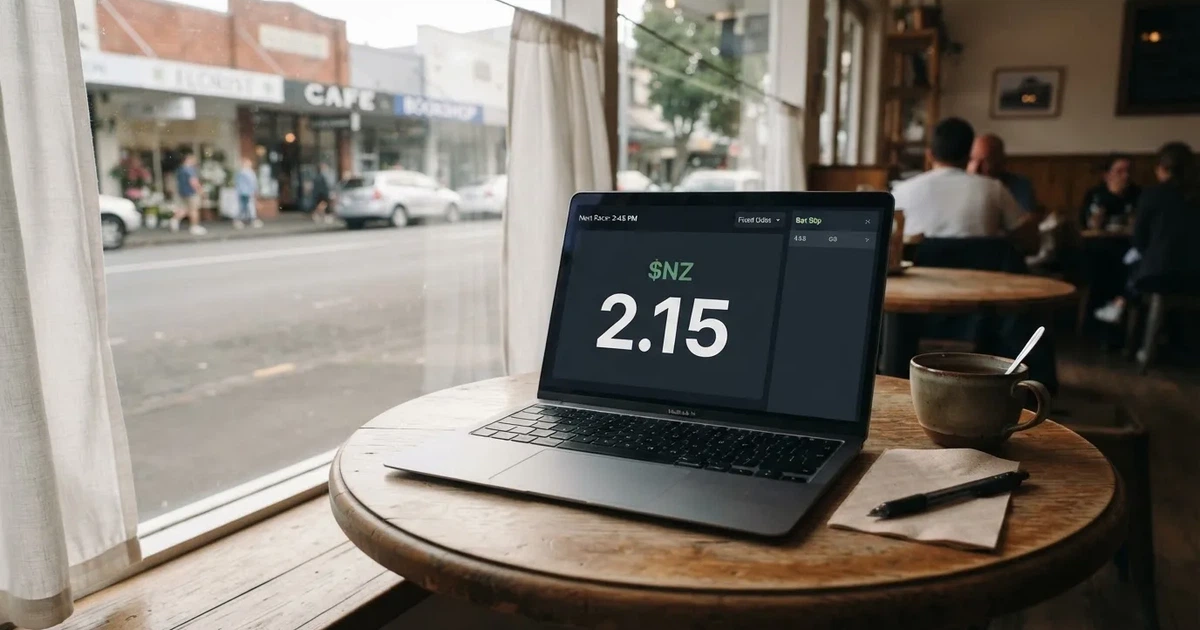
Since the Racing Industry Amendment Act 2025 took effect on 28 June 2025, only two online brands may lawfully take sports and racing bets from a person in New Zealand: TAB and Betcha, both run by TAB NZ. No other bookmaker holds a New Zealand licence, because there is no licence to apply for. Every offshore brand a New Zealander sees advertised is breaking the law by serving them, even when it pays its own country’s gambling duty, even when it offers a juicy welcome package, even when it looks like the most sophisticated site on the internet. The choice on the page below — between the legal monopoly and ten offshore brands that meet Kiwi punters in the wild — is not a comparison of equals. It is a comparison of what each one actually costs the person paying.
Currency of data: 30 October 2026 · licence claims verified against the Department of Internal Affairs register and the Racing Industry Act 2020 as published.
Table of Contents
- What safer gambling in New Zealand actually looks like
- Crypto and anonymity: what an offshore crypto sportsbook actually gives a Kiwi punter
- Bonuses and free bets: what the welcome offer really spends
- Mobile and apps: where the bet actually happens
- Live betting and cash out: what unfolds in the last ten minutes
- Bet types and odds: how the price becomes a return
- Sports and tournaments: what a Kiwi punter actually bets on
- New bookmakers: the newcomer problem in New Zealand
- How online betting works, start to finish
- The bookmakers reviewed
- How the brands stack up on the cost question
- Overview and core: what “online betting in New Zealand” actually means in 2026
- Legality and regulation: what section 74AAA actually does
- The cost in one sentence
- Frequently asked questions
What safer gambling in New Zealand actually looks like
The first thing a punter will note about a betting site is what it does when they stop enjoying it. TAB NZ builds three tools into its app: deposit limits you set yourself, time-outs that cool the account for a chosen window, and self-exclusion that closes both the TAB and the Betcha brand together. An exclusion is not a single-brand gesture. TAB NZ also lists the free Gambling Helpline (0800 654 655, text 8006) inside the app, alongside the Safer Gambling Aotearoa service, so the path to help sits where the punter already is — between the bet slip and the next race.

Offshore brands offer their own versions of these tools, often more elaborate. Glorion support is reachable by live chat or email. Sportaza offers account closure. RoyalistPlay, Alawin, FunBet and the rest each carry an 18-plus gate at signup. None of them reach the New Zealand harm-minimisation framework. No complaint a Kiwi punter files with an offshore brand can be escalated to the Department of Internal Affairs, the Advertising Standards Authority, or any other local body. When the wagering goes wrong, the New Zealand recourse that exists for TAB NZ simply does not exist for them.
The second thing to notice is the price of harm prevention itself. TAB NZ pays a Problem Gambling Levy of 0.74% of its gross profits — in force from 1 July 2025 to 30 June 2028 — and that money funds the helpline, treatment services and public-health research. Offshore brands fund whatever their own licence regime requires, which in most cases named in this guide is no New Zealand scheme at all. A punter picking the legal operator is not just buying local recourse; they are paying into the local harm-reduction infrastructure that picks up the phone when 0800 654 655 rings.
There is no national online-betting exclusion register in New Zealand. The register the new casino law introduces is for online casinos only, not for sports and racing. A punter who has self-excluded from TAB NZ has self-excluded from both of TAB NZ’s brands, and that is the only New Zealand register that touches sports or racing.
A last point the data makes plain: there is no published penalty for the player. Section 19(4) of the Gambling Act 2003, inserted in 2025, says an individual cannot be convicted for placing a bet with an offshore operator that is itself breaking section 74AAA. The law targets the operator, not the punter. So a Kiwi punter who wanders offshore is not committing an offence, but is also collecting none of the protection that comes from operating inside the regime.
Crypto and anonymity: what an offshore crypto sportsbook actually gives a Kiwi punter
The pitch for offshore crypto betting is three words: fast, private, yours. The reality, measured against what New Zealand law actually requires, is thinner.

The brands New Zealand punters meet most often — Thunderpick, Roobet, Baji, SpinBetter, Telbet, BetNinja — accept cryptocurrency because it is cheaper to process than a card, faster to settle than a bank wire, and easier to receive from jurisdictions that do not want a paper trail. Telbet openly bills itself a crypto casino and sportsbook, with a welcome offer of 200% up to 1 BTC plus 50 free spins and a 5 USDT free bet on its Russian-language mirror. SpinBetter accepts crypto and runs a Costa Rica company behind it. Thunderpick operates under a Curaçao licence (OGL/2024/677/0722) and settles in digital assets. Roobet sits under OGL/2024/687/0427. Baji operates under an Anjouan licence (ALSI-202410030-FI1).
None of these licences permits them to take bets from people in New Zealand. A Curaçao licence gives a brand the right to operate from Curaçao; an Anjouan licence gives it the right to operate from the Union of the Comoros; a Tobique Gaming Commission e-gaming licence — RoyalistPlay holds No. 0000002, Sportaza’s terms cite 0000067 — gives it the right to operate under Tobique’s framework. None of these frameworks reaches across to a person placing a bet from Auckland, Wellington or Christchurch. From a New Zealand law standpoint, the bets are unlawful on the operator’s side. The punter’s bank may not see them; the New Zealand regulator will not see them either; no one from Inland Revenue will be told. The privacy is real. So is the lack of recourse.
A punt in crypto at an offshore brand is also a punt that does not earn the New Zealand harm-minimisation layer. Crypto wallets do not enforce deposit limits unless the punter wires the limit through manually. Self-exclusion at one offshore brand does not carry to the next, and the Gambling Helpline is not on the cashier page. The anonymity is a feature of the transaction. The cost is everything that anonymity usually costs.
There is one more quiet price. Crypto prices move. A bet placed at 3.00 and settled in BTC may pay out more or fewer dollars by the time the blockchain confirms. Decimal odds at a New Zealand bookmaker settle in dollars on the day. Decimal odds at a crypto sportsbook settle in dollars at the moment the chain confirms the payout. The difference is small per bet. Over a year of punting it adds up.
Bonuses and free bets: what the welcome offer really spends
The word “free” is doing a lot of work in offshore sportsbook marketing, and the arithmetic is what exposes it. A welcome offer of “100% up to $200” means a brand matches the first deposit dollar-for-dollar up to a cap, and then attaches a turnover requirement — a multiplier the bonus must be wagered before it can be withdrawn. A “free bet” means a stake the brand gives the punter, but the stake is rarely paid back on a win; only the profit lands. A “risk-free” bet usually means a refund as a free bet if the first wager loses, which is a free bet with strings, not a refund in cash. A “boosted odds” offer means the price of a single bet is lifted, but the stake limit is usually small and the market narrow.
The first rule for any of these is to read what the brand does to your stake while the bonus is open. Golden Panda’s bonus terms, last updated 31 August 2026, state that bonus funds cannot be used while the player has an open sports or casino bet. That is the price of the bonus: your real money runs first, and the bonus is frozen behind it. Sportaza, SpinBetter and the rest of the offshore cluster carry similar mechanics, written in terms pages most punters never read. The price of a bonus is not the headline; it is the conditions.
The second rule is to count what the rollover costs. A 100% match of $200 with a 6x turnover on the bonus asks the punter to place $1,200 of qualifying bets before any of it can be withdrawn. If the average margin across those bets is 5%, the expected cost of clearing the offer is $60. The “free” $200 has cost sixty of it before the punter has placed a dollar of their own. The advertised value is gross; the cleared value, net, is what is left in the pocket.
TAB NZ’s bonus mechanic sits on the other side. New TAB NZ customers can receive Bonus Cash that splits across multiple bets. The app lists a Mega Multi bonus of up to $50 in Bonus Cash when a multi of four or more legs falls short by a set number of legs. TAB’s terms apply, including minimum odds and an expiry window. None of this turns into a withdrawal problem; the Bonus Cash pays out as cash when the multi lands, with the bonus value attached. The wagering weight is lighter than the offshore equivalent, and the conditions are written by an operator that publishes its full rule set on a New Zealand site.
The third rule applies whether the offer is offshore or local: never print a promo code, never follow an affiliate link as if it were a tip. The page does not advertise. It describes what the offer is, what it costs to clear, and what kind of punter it suits. The reader decides whether to claim.
Mobile and apps: where the bet actually happens
Most New Zealand punters no longer visit a TAB outlet. They bet from the phone. TAB NZ’s app, listed on the New Zealand App Store as “TAB – Racing & Sports Betting” under the seller name New Zealand Racing Board, was first released on 8 September 2014 and carries a 17+ age rating, while the rules state that customers must be 18 or over to bet. Betcha is the newer TAB NZ app, published on the New Zealand App Store by Entain New Zealand Limited, first released on 6 August 2024.
Inside the TAB app, the racing codes are listed — thoroughbred, harness and greyhounds — and the sports book covers rugby union, rugby league, and other codes, both pre-match and live. The app carries Trackside live race streaming with in-app betting, racing form, Blackbook and Jockey Challenge tools, and a simplified wallet for deposits and withdrawals. Bet types available include Same Race Multis, Same Game Multis, one-tap Popular Multis, and a Place Extra option that lets punters back runners to finish up to 10th in selected races. The combination is unusual: a tote product, a fixed-odds product, a live stream and a multi builder, all in one app.
Betcha’s app is the younger sibling. It runs the TAB product under Entain’s tech, with a faster signup, a younger visual identity, and the same TAB NZ wallet behind it. For most Kiwi punters the choice between TAB and Betcha is about feel rather than function; the betting market, the odds and the promotions are owned by the same operator.
Offshore sportsbooks all run mobile-first. RoyalistPlay, Sportaza, Alawin, FunBet, Boomerang Bet, LunuBet and the rest offer browser and app products that work on a modern handset. The browser product is usually faster to load; the app product usually has the better cashier and the biometric login. None of them have been stress-tested by the New Zealand regulator on a New Zealand network, and that is a real gap when the live stream drops on a Super Rugby Pacific match.
Two practical points. The TAB app’s wallet handles deposits and withdrawals in New Zealand dollars, which removes the FX spread a Kiwi punter pays otherwise at an offshore brand. BillyBets, by contrast, shows New Zealand in its country selector but only Euro on the currency filter — a small tell about which market the brand has actually built for. And every offshore app the punter installs on a New Zealand Apple or Google account is, by section 74AAA, a service that is unlawful for the operator to provide to them. The app will not say so. The Department of Internal Affairs already told those operators to withdraw.
Live betting and cash out: what unfolds in the last ten minutes
Live betting is where the margin is tightest and the punter’s discipline matters most. TAB NZ’s app lists live betting on racing and sport — rugby, football, basketball, cricket — and the in-play product sits alongside the pre-match menu. The site’s own rules cover how a live bet settles if the event is abandoned, if the price moves between placement and confirmation, and if the stream cuts out. Cash out on a TAB NZ multi lets the punter close the position before the last leg lands; the price offered is the bookmaker’s price, not the punter’s.
Cash out is also the place where the marketing word “live” gets stretched. An offshore brand that calls itself a “live betting site” may only offer a handful of in-play markets per match, refresh the prices every few seconds, and apply a suspension window around goals and tries. FunBet, by its own home page, lists live betting across football, ice hockey, American football, basketball, volleyball, tennis, rugby and baseball, with a 24/7 bookmaker. The list is long; the depth per match is shorter than TAB NZ’s.
Live betting’s specific price is the vig the bookmaker keeps on every refresh. A pre-match 1X2 market might price at a 5% margin; the same market in-play, ten minutes in, can run to 8% or 10%, because the bookmaker is repricing faster than the punter can react. The TAB NZ product is no exception; it just sits inside a framework where the New Zealand rules of engagement are the same as for the pre-match product.
The cash-out feature itself is a feature of the bet slip, not of the underlying market. A punter who closes a four-leg multi at half its eventual payout has paid for the certainty twice — once at placement, once at cash out. The trade-off is real, and the price of taking it is visible on the slip.
Bet types and odds: how the price becomes a return
Decimal odds are the standard in New Zealand, and they read simply. A $10 stake at odds of 3.00 returns $30 — the $10 stake plus $20 of profit. The same stake at odds of 1.50 returns $15 — the $10 stake plus $5 of profit. A multi with four legs at odds of 2.00, 3.00, 1.50 and 4.00 multiplies into one price of 36.00, and the same $10 returns $360. The arithmetic is the easy part of betting. The harder part is the price the bookmaker takes on the way through.
That price is the margin. For a market with three outcomes — home win, draw, away win — the bookmaker publishes three decimal odds. The payout share is calculated as 1 divided by the sum of the reciprocals of those three odds. Take a football match priced at 2.10 for the home win, 3.40 for the draw, and 3.60 for the away win. The reciprocals are 0.476, 0.294 and 0.278, which sum to 1.048. The payout share is 1 ÷ 1.048 = 0.954, or 95.4%. The margin is 1 − 0.954 = 0.046, or 4.6%. The other 4.6% of every dollar bet on this market is what the bookmaker keeps, on average, across a long run.
The margin is invisible on the bet slip. It is the difference between the “true” price and the price the bookmaker offers, baked into every line. Two bookmakers can quote the same match at the same set of odds and still have different margins, because the prices will differ slightly and the reciprocals will differ with them. The punter who shops the line is the punter who keeps a small slice of that margin back.
For TAB NZ, the published odds on racing and on the major sports sit in the 4% to 6% margin band for most pre-match 1X2 markets. In-play margins run higher. Same Game Multi margins run higher still — the legs compound and so does the vig. Offshore brands with thin books often show 7% to 10% on the same fixture, because they cannot afford to be the sharpest line in a market they do not lead.
A practical rule. If the margin is below 4%, the bookmaker is competing hard for the market. If it is above 7%, the bookmaker is comfortable taking the bets it gets. Either way, the punter pays the vig. The skill is in being on the right side of it more often than not.
Sports and tournaments: what a Kiwi punter actually bets on
The racing codes come first. Thoroughbred, harness and greyhound racing all sit on the TAB product, with greyhound racing closing in stages from 1 August 2026 — and from that date, offshore operators may not take bets on greyhound races either, under section 74AAA as it applies to the codes TAB NZ is withdrawing. The Melbourne Cup sits at the centre of the spring racing calendar, with Cup Day in November the single busiest betting day of the New Zealand year. Quaddie, Big6, First4 and Exacta markets all live in the racing product.
On the sports side, Super Rugby Pacific, NRL, the All Blacks in tests, the Black Caps in international cricket, the Warriors in the NRL, the Football Ferns and the All Whites carry the heaviest volume. TAB NZ covers the full codes, with Same Game Multis built for rugby, league and football matches — back the All Blacks to win, the first try-scorer, and the total points, all on one slip. The cricket product includes live markets through the Black Caps’ summer.
Offshore brands cover the same sports, sometimes wider. FunBet’s home page lists football, ice hockey, American football, basketball, volleyball, tennis, rugby and baseball as its core markets. RoyalistPlay, Sportaza and Alawin run similar menus. The breadth is there; the depth on New Zealand-specific markets — the NPC, the Ford Trophy, domestic harness racing — is not, because those markets belong to TAB NZ.
A live bet on a Melbourne Cup field of 24 runners is a different product from a same-game multi on an All Blacks test, and the punter’s margin differs with the market. Racing exotics carry higher margins than win and place, because the dividend is harder to predict and the bookmaker keeps a larger slice. Multi legs compound the margin across every leg. The price of the bet type is the price of the format, not just the price of the pick.
New bookmakers: the newcomer problem in New Zealand
A “new bookmaker” in the international market is a brand that has launched in the last two or three years, usually with a Curacao or Anjouan licence, a crypto cashier, a sportsbook-plus-casino bundle, and a marketing budget aimed at affiliate sites. Roobet, Thunderpick, SpinBetter and the rest of the cluster fit the pattern. Soft2Bet’s Rabona, launched on 23 December 2019, is older than most.
In New Zealand, none of this is relevant. Section 74AAA does not care when the brand launched; it cares whether the brand is TAB NZ. The newness is a marketing word that means “we have not had time to ruin our reputation yet”, which is the wrong thing to optimise for in a market where reputation is not the regulator.
A punter looking at a “new” offshore brand must ask four questions. Does it hold a licence from a regime with a complaints process the punter can use? Does the cashier actually accept New Zealand dollars without forcing a conversion? Does the brand publish a New Zealand-specific terms page that addresses section 74AAA at all? Does the operator answer the phone when the punter’s withdrawal stalls?
The honest answer, for almost every brand in the offshore set, is no, no, no and no. The novelty is the bait. The cost is everything that the New Zealand framework provides and the offshore brand does not.
How online betting works, start to finish
The mechanics of a punt in New Zealand are short. Open the TAB app or visit the TAB site. Create an account, verify a New Zealand address and ID, and set a deposit limit as part of the safer-gambling tools. Fund the wallet from a New Zealand bank, a debit card, or POLi. Choose a race or a sport, pick a market, enter a stake on the bet slip, and confirm. The bet is logged in the account, settled when the event finishes, and the return lands back in the wallet.
A multi is the same flow with more legs. A same-game multi is the same flow with legs from one event. A live bet is the same flow with the price moving under the slip. A cash out is a button on an open bet that closes the position at the bookmaker’s offered price.
Withdrawals go back through the same wallet, to the same bank account or card, after the operator’s processing window. TAB NZ’s wallet is built to settle on the same day for most methods; offshore brands vary widely, with bank wires taking three to seven business days and crypto payouts taking minutes to hours. The tax treatment for the punter is that recreational winnings are not taxable in New Zealand, and prize money from TAB horse, dog and trotting races is not taxable either. A punter who bets as a business is a different case, and Inland Revenue is the right place to ask.
The order matters because every step has a New Zealand-specific layer that the offshore brands skip. The address verification is a New Zealand requirement for TAB NZ. The deposit limit is a New Zealand safer-gambling tool. The complaints path is a New Zealand recourse. Offshore brands replicate none of this.
The bookmakers reviewed
The set below lists the only lawful New Zealand option first, then ten offshore brands a New Zealand punter is likely to meet in the wild. The first two are not rivals; they are the same operator under two brand names. The remaining ten are described and rated by the same criteria, and each is named “not licensed in New Zealand” because that is what section 74AAA says about them.
TAB (TAB NZ’s racing and sports brand)
TAB is one of the two online brands of TAB NZ, and the only lawful retail and online bookmaker in New Zealand since section 74AAA took effect on 28 June 2025. The site lists the full New Zealand racing product — thoroughbred, harness and greyhound until greyhounds close from 1 August 2026 — together with Super Rugby Pacific, NRL, international rugby and cricket, and the major football leagues, both pre-match and live. TAB NZ runs Same Race Multis, Same Game Multis, one-tap Popular Multis and Place Extra, with live Trackside streaming through the app. The same-wallet deposit-and-withdrawal flow settles in New Zealand dollars, and the safer-gambling tools sit inside the app: deposit limits, time-outs, self-exclusion, plus the Gambling Helpline (0800 654 655, text 8006) and Safer Gambling Aotearoa. The Mega Multi bonus of up to $50 in Bonus Cash pays out as cash on a winning multi, with the operator’s own terms setting the qualifying conditions.
TAB is the only online bookmaker in New Zealand with the full stack: a racing product, a sports product, a tote product, a live stream, a multi builder and a self-exclusion that crosses to Betcha. The product is dense, the conditions are written in plain New Zealand English, and the recourse runs through the Department of Internal Affairs and the Advertising Standards Authority. For any punter inside New Zealand, the choice is not really TAB versus the rest; the choice is whether to use TAB at all, or to take the offshore path the next ten entries describe.
Betcha (TAB NZ’s online sister brand)
Betcha is the second of TAB NZ’s two online brands, launched on the New Zealand App Store on 6 August 2024 and published by Entain New Zealand Limited. The product is the TAB product under a younger visual identity: the same racing codes, the same sports, the same Same Game Multi builder, the same live betting, the same wallet behind it. Signup is faster, the brand reads newer, and the safer-gambling tools carry across from TAB.
Treating Betcha as a separate bookmaker from TAB misses the point. They are one operator, one wallet, one self-exclusion register, one helpline path. A punter who self-excludes from TAB is self-excluded from Betcha; a Bonus Cash promotion on one brand sits in the same balance as the other. The two brands exist so TAB NZ can talk to a younger audience without diluting the TAB identity; for the punter, the practical difference is the colour of the app icon.
Glorion — not licensed in New Zealand
Glorion’s support runs by live chat or email, and the site accepts customers aged 18 or over. That is the entire local-facing footprint in the data: a help channel and an age gate. The brand names no licence that applies to New Zealand under section 74AAA, no New Zealand complaints route, and no harm-minimisation framework that reaches the Gambling Helpline. Glorion is offshore by every measure that matters for a New Zealand punter.
A Kiwi punter who lands on Glorion is using a brand that, by New Zealand law, is not allowed to take their bet. The cost is everything that comes with that: no recourse at the Department of Internal Affairs, no Advertising Standards Authority path, no Problem Gambling Levy contribution, no Australian-style harm-minimisation overlay. The product may be polished; the framework is not.
RoyalistPlay — not licensed in New Zealand
RoyalistPlay is owned and operated by Novatrix SRL, a Costa Rica company with registration number 3-102-893958, and the brand states it holds Tobique Gaming Commission e-gaming licence No. 0000002. The Tobique framework gives the brand a regulatory home; it does not give it a right to take bets from people in New Zealand. New Zealand law under section 74AAA does not recognise Tobique as a basis for serving Kiwi punters, and the New Zealand complaints framework does not extend to Tobique-licensed brands.
A punter who opens a RoyalistPlay account from New Zealand is taking a bet from an operator that the Department of Internal Affairs has already told to withdraw. The brand’s local-facing footprint is the licence number and the registration number; everything else is offshore. The price of the offshore product is the absence of the New Zealand one.
Sportaza — not licensed in New Zealand
Sportaza’s footer states it is licensed and regulated by the Government of the Autonomous Island of Anjouan, Union of Comoros, under licence No. ALSI-202606064-FI2, while its terms in section 1.4 cite Tobique licence No. 0000067. The two licence references sit beside each other on the same site, and neither gives the brand a right to serve New Zealand. Section 74AAA says only TAB NZ may offer racing or sports betting to a person in New Zealand, regardless of where the operator is incorporated.
Sportaza’s product is broad — the sportsbook covers the major codes, the casino sits beside it, the live markets run through the weekend. The breadth is irrelevant to the legal position. A New Zealand punter who uses Sportaza is using an operator that has no New Zealand presence, no New Zealand complaints route, and no path to the Gambling Helpline that does not run through the operator’s own support team first.
Telbet — not licensed in New Zealand
Telbet describes itself as a crypto casino and sportsbook, with a welcome offer of 200% up to 1 BTC plus 50 free spins, plus a 5 USDT free bet on its Russian-language mirror. The crypto focus is the brand’s pitch; the crypto focus is also the reason no New Zealand payment institution will be settling the bet, and no New Zealand regulator will be watching the cashier. The brand names no licence that applies in New Zealand.
Telbet is the clearest case in the set of what “crypto sportsbook” actually means for a New Zealand punter. Fast deposits, fast withdrawals, a wallet the bank cannot see. No recourse if the wallet disappears. The cost of the offshore product is the absence of every safeguard that comes with operating inside the New Zealand regime.
Alawin — not licensed in New Zealand
Alawin accepts customers aged 18 or over only. That is the local-facing footprint: an age gate and nothing else. No New Zealand licence, no New Zealand complaints route, no harm-minimisation framework that reaches a New Zealand punter. Section 74AAA treats Alawin as an operator that is not allowed to take bets from people in New Zealand.
The product will look familiar to anyone who has used an offshore sportsbook-and-casino bundle: a sportsbook covering the major codes, a casino alongside it, a few live markets, a welcome bonus. The Alawin pitch is the Alawin product. The Alawin cost is the absence of the New Zealand framework.
FunBet — not licensed in New Zealand
FunBet’s sportsbook offers odds on football, ice hockey, American football, basketball, volleyball, tennis, rugby and baseball, with live betting and a 24/7 bookmaker. The breadth across eight sports is the brand’s distinguishing feature in the offshore cluster, and the live product is genuinely live. None of that licence the brand for New Zealand.
FunBet is the kind of brand that, in any other market, is a reasonable third or fourth sportsbook for a punter shopping the line. In New Zealand, the comparison fails at the framework. The line might be sharp; the framework behind the line is not. A punter choosing FunBet over TAB NZ is choosing a sharper line in exchange for losing every New Zealand safeguard.
BetNinja — not licensed in New Zealand
BetNinja states that it is licensed to conduct online gaming operations by the Union of the Comoros. Anjouan-Comoros licensing is a real framework — Sportaza cites one, Baji cites one — and it gives the brand a regulatory home. It does not give the brand a right to serve New Zealand. Section 74AAA does not recognise Comoros as a basis for taking bets from Kiwi punters, and the New Zealand complaints framework does not extend there.
BetNinja’s product sits inside the same offshore pattern as the rest: sportsbook, casino, live markets, a welcome offer that pays in digital assets. The brand’s distinguishing feature in the comparison is the Comoros licence citation, and the Comoros licence is also the reason the brand does not appear in any New Zealand register.
22Bet — not licensed in New Zealand
22Bet’s address redirects, and the site shows copyright for 2017–2026 with a 21+ age notice. The brand is one of the longest-running offshore sportsbooks in the market, with Curaçao licensing (8048/JAZ) through TechSolutions Group N.V. None of that gives 22Bet a New Zealand licence under section 74AAA, and the brand’s local-facing footprint is the age notice and the redirect.
22Bet is a known brand in the international market — depth of markets, long list of payment methods, broad sports coverage — and that familiarity is exactly the cost. A New Zealand punter who treats 22Bet as a sensible alternative to TAB NZ is using an operator that has been told by the Department of Internal Affairs to withdraw, and that has no New Zealand complaints route. The product is the product. The framework is not New Zealand.
How the brands stack up on the cost question
The comparison below lines up the brands reviewed above by what they actually offer a New Zealand punter. The “New Zealand status” column carries the lawful position; the “what the operator’s own terms state” column carries the offer the punter sees when they land on the site. Read them together.
| Brand | New Zealand status | What the operator’s own terms state |
|---|---|---|
| TAB | TAB NZ brand, lawful under section 74AAA | New Zealand racing and sports, in-app deposit limits, time-outs, self-exclusion across TAB and Betcha, Mega Multi Bonus Cash up to $50 |
| Betcha | TAB NZ brand, lawful under section 74AAA | New Zealand racing and sports under Entain, same wallet as TAB, age 18+, app first released 6 August 2024 |
| Glorion | Not licensed in New Zealand | Live chat and email support, age 18+ gate |
| RoyalistPlay | Not licensed in New Zealand | Tobique e-gaming licence No. 0000002, Novatrix SRL, Costa Rica |
| Sportaza | Not licensed in New Zealand | Anjouan licence ALSI-202606064-FI2, terms cite Tobique 0000067 |
| Telbet | Not licensed in New Zealand | Crypto sportsbook, 200% up to 1 BTC plus 50 free spins welcome, 5 USDT free bet on Russian mirror |
| Alawin | Not licensed in New Zealand | Age 18+ gate |
| FunBet | Not licensed in New Zealand | Sportsbook on football, ice hockey, American football, basketball, volleyball, tennis, rugby, baseball, 24/7 live |
| BetNinja | Not licensed in New Zealand | Union of the Comoros licence cited |
| 22Bet | Not licensed in New Zealand | Curaçao licence 8048/JAZ, TechSolutions Group N.V., age 21+ notice |
The shape of the table tells the story. Two rows carry the lawful New Zealand status, with concrete product detail attached. Eight rows carry “not licensed in New Zealand”, with thin detail about the offshore product the brand happens to mention. That is what section 74AAA does: it collapses the offshore market into a single category for the New Zealand punter, and it leaves TAB and Betcha as the only rows that actually matter for the comparison.
Overview and core: what “online betting in New Zealand” actually means in 2026
The phrase “online betting in New Zealand” now means, by statute, two things: the TAB NZ product under the TAB and Betcha brands, and the offshore brands that serve Kiwi punters despite being told not to. The first is the legal market; the second is a market that exists because the offshore operator has not yet been prosecuted under section 74AAA.
The core of the market is the racing product. Thoroughbred and harness racing carry the year; greyhound racing closes from 1 August 2026, and offshore brands lose the right to take bets on the code from that date. The Melbourne Cup in November is the high point. The All Blacks in July and the Super Rugby Pacific season through autumn and winter are the next biggest events on the sports side. NRL through the Warriors and the Australian clubs, the Black Caps in the cricket summer, and the Football Ferns and All Whites in their international windows fill out the year.
The TAB product changes shape within those events. Same Game Multis let a punter combine outcomes from one match; Same Race Multis do the same for a race card. Boosted odds lift the price of a single bet on a chosen event; Bonus Cash lands in the wallet when a multi falls one leg short of a defined payout. Live betting sits on top, with in-play markets on the bigger matches and a cash-out button on the open bet. The mechanics are familiar to anyone who has used an online sportsbook; the difference in New Zealand is the operator behind the mechanics.
Legality and regulation: what section 74AAA actually does
Section 74AAA of the Racing Industry Act 2020, inserted by the Racing Industry Amendment Act 2025 and in force since 28 June 2025, says no person other than TAB NZ may offer racing betting, sports betting or other racing or sports betting to a person in New Zealand, regardless of where that person is resident or incorporated. The Department of Internal Affairs is the regulator, and the Gambling Act 2003 sits behind the Racing Industry Act 2020 as the broader gambling framework.
The change was not small. Before 28 June 2025, offshore brands were able to take bets from New Zealand residents with a point-of-consumption charge attached; the change ended that charge on 30 June 2026 and replaced it with a prohibition. The Department told the offshore operators serving New Zealand to withdraw with immediate effect. Several did; several did not.
The Online Casino Gambling Act 2026 is a separate piece of legislation that licenses online casino gambling. It does not extend the betting monopoly and it does not create a sports-betting licence route. TAB New Zealand winning the right to apply for a casino licence does not give it (or anyone else) a path to a sports-betting licence, because there is no path to a sports-betting licence. The sports-betting monopoly is the whole point.
The penalty for breaching section 74AAA is not stated in the section, and no prosecution of an offshore bookmaker under the section was found in the data. The point-of-consumption charge ended. The 12% online gambling duty (rising to 16% from 1 January 2027) on offshore operators supplying New Zealand residents remains payable — but a duty being payable does not make an offer lawful. Payment of duty is not a licence.
The greyhound racing closure from 1 August 2026 is the next concrete change. The Racing Industry Act 2020 withdraws greyhound racing as a betting code in New Zealand, and section 74AAA extends to the code from the date of withdrawal. From 1 August 2026, an offshore operator may not take bets on New Zealand greyhound races, even if the same operator takes bets on Australian greyhound races. The closure is on both sides of the bet.
The Inland Revenue position on the player side is that recreational gambling winnings are generally not taxable, and prize money from TAB horse, dog and trotting races is not taxable. A punter who bets as a business is a different case. The page does not offer tax advice; the page notes that the rule is general, not absolute, and that Inland Revenue or an accountant is the right next step.
The cost in one sentence
The cost of online betting in New Zealand in 2026 is the price of the bet plus the price of the framework. TAB NZ and Betcha carry both, and the framework is the New Zealand one — the safer-gambling tools, the helpline, the regulator, the recourse. The offshore brands carry only the price of the bet, plus the absence of the framework. The choice is not which brand has the better welcome bonus. It is which framework the punter is willing to bet inside.
Frequently asked questions
How can I bet on the Melbourne Cup online?
The only lawful way to bet on the Melbourne Cup from New Zealand is through TAB NZ — either at tab.co.nz or via the Betcha app — using fixed-odds or pool (tote) products, including Win, Place, Quinella, Exacta, Trifecta, First Four and the various multi products. Offshore brands that list the Melbourne Cup are breaking section 74AAA by taking the bet, and the New Zealand complaints framework does not reach them if a payout stalls.
How do I bet on horses online?
Place a bet through TAB NZ’s app or website. Choose the race, pick the market (Win, Place, Each Way, Quinella, Exacta, Trifecta, First Four), enter the stake on the slip, and confirm. Same Race Multis let you combine outcomes from one race onto a single slip. The dividend on pool bets is declared after the race; the return on fixed-odds bets is calculated from the stake and the decimal odds at placement.
How do I bet on Lotto online?
Lotto is run by Lotto NZ, not by TAB NZ, and is a separate product from sports and racing betting. The Lotto NZ app and website handle online ticket purchases, draws and prize claims. The Gambling Act 2003 covers Lotto as a gambling product, while the Racing Industry Act 2020 governs TAB NZ. The two products are not interchangeable: a TAB NZ account does not buy Lotto tickets, and a MyLotto account does not place racing bets.
Which bookmaker may lawfully take sports and racing bets in New Zealand?
TAB NZ, operating through its two online brands TAB and Betcha, is the only provider lawfully offering racing and sports betting to people in New Zealand, under section 74AAA of the Racing Industry Act 2020 (in force since 28 June 2025). The Department of Internal Affairs told unlicensed providers to withdraw with immediate effect. There is no other lawful bookmaker in New Zealand, and there is no licence route for another.
How is the return on a bet worked out from the stake and the odds?
The return on a winning single bet is the stake multiplied by the decimal odds. A $10 stake at odds of 3.00 returns $30 — the $10 stake plus $20 of profit. A multi multiplies the odds of the legs together into one price; a $10 stake on a four-leg multi at combined odds of 36.00 returns $360. The same arithmetic applies to a TAB NZ bet and to an offshore brand’s bet; the framework around the bet is what differs.
What is the bookmaker’s margin, and how does it show in the odds?
The margin is the slice of every dollar bet that the bookmaker keeps on average across a market. For a three-outcome market priced at 2.10, 3.40 and 3.60, the payout share is the reciprocal sum inverted: 1 ÷ (0.476 + 0.294 + 0.278) = 95.4%. The margin is 1 minus that, or 4.6%. The other 4.6% of every dollar is what the bookmaker keeps. In-play and multi markets run higher, often 7% to 10%, because the bookmaker is repricing faster than the punter can react.
Published by the Nzesportsbets team.